The History of St Mary’s
A Sacred Place by the River Thames
St Mary's Church is at the heart of what was once the old village of Staines. Its position on a distinctive rise close to the River Thames suggests the site has been a place for gathering and worship since pre-Christian times. This long association with prayer and community has drawn people here for well over a thousand years, giving St Mary's an enduring presence that continues to this day.
Early Christian Roots
The first church on this site is said to have been built by St Ermingeld (Erminildis) in 685 AD. Ermingeld was a nun at Minster in Sheppey, which had been founded by her mother Sexburga. Ermingeld was enshrined at Ely where she had been Abbess.
The earliest written reference to St Mary’s Church Staines dates from 1179, though evidence from the Domesday Book of 1086 shows that the town already had an established vicarage held by Westminster Abbey, indicating a well-developed Christian community in Staines by the late Saxon period. Evidence of this is the provision by the tenured vicar of two large candles for the altar of St Mary at Westminster that were to be lit on the eve of Epiphany.
In medieval times, the parish served a wide area, including Teddington, Ashford, Laleham, and possibly Yeoveney, reflecting its regional importance.
Little is known of the physical appearance of the medieval church as buildings of that era were made from wattle and daub, though later engravings offer some clues. St Mary’s had several altars dedicated to saints, as was customary in many churches.
In 1456, Henry VI granted a licence for the establishment of the Fraternity of the Nativity of Our Lady, whose members provided practical help to one another and maintained a chantry in the chapel of the Holy Cross.
The 17th Century Tower
While most of the medieval church has not survived, one striking feature remains: the five-stage buff brick west tower, built in 1631 and long associated with the architect Inigo Jones. The tower is the oldest surviving part of St Mary’s Church, Staines, its corner buttresses, decorated upper stage and tall belfry windows giving it a presence that has endured for nearly four centuries.
The 18th and 19th Centuries
St Mary's is home to a ring of eight bells, all cast by the Whitechapel Bell Foundry in 1734. The Whitechapel Bell Foundry was one of the most celebrated bell founders in the world, responsible for casting some of England's most famous bells. This means St Mary's bells have rung out over Staines for nearly three centuries.
St Mary’s Church attracted national attention in The Mirror after a large part of the church collapsed one Sunday morning in the 1820s. This led to a private Act of Parliament in 1827 authorising the remains to be blown up with gunpowder and rebuilt. It is likely that the last physical evidence of the Saxon church disappeared from the site at this time.
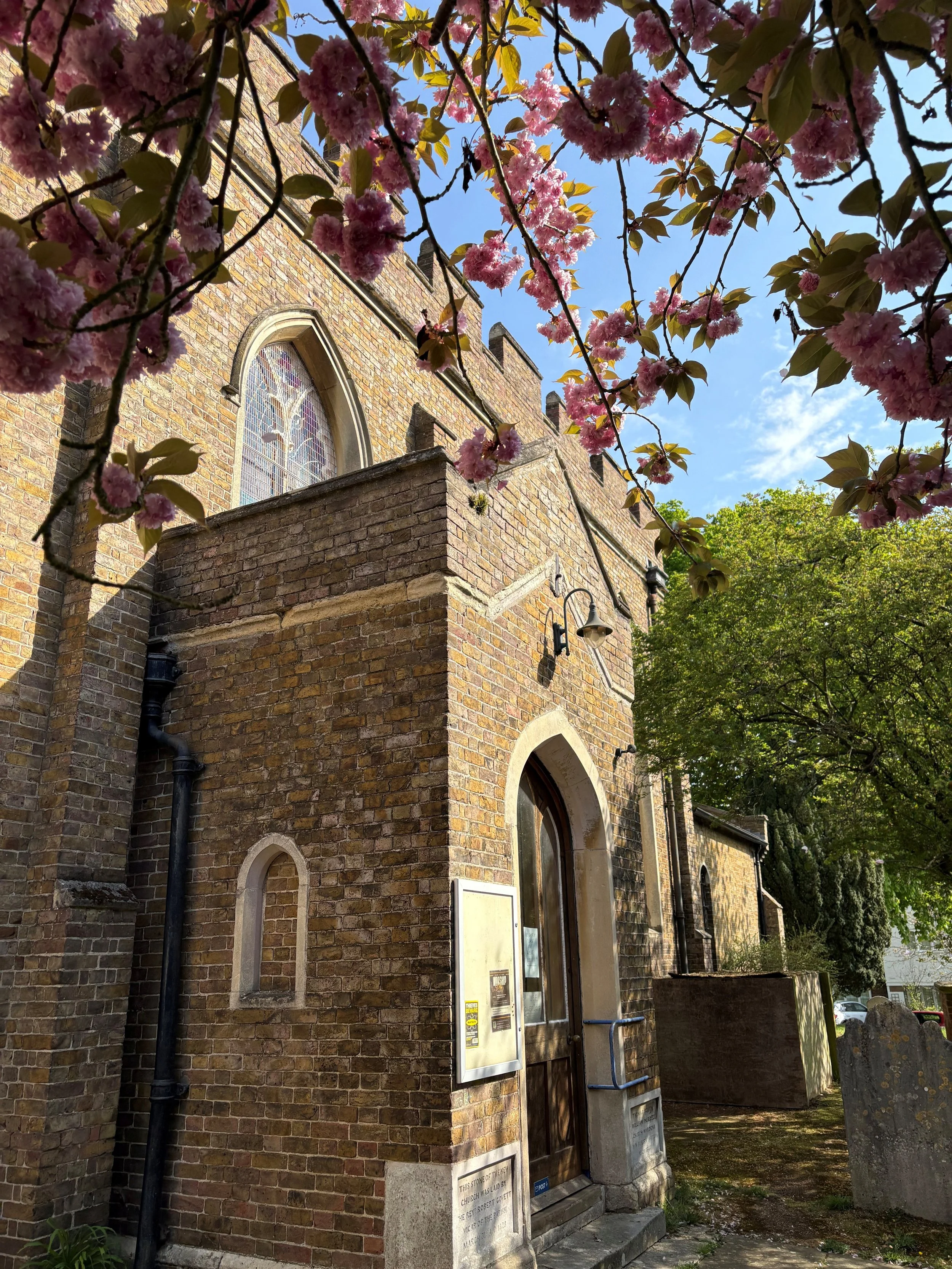
The new church was designed by architect John Burges Watson and constructed in 1828–1829. Built in an Early English Gothic style, it featured a battlemented nave, tall lancet windows with paired lights, while retaining and raising the 17th-century tower.
Victorian Enhancements and Modern Life
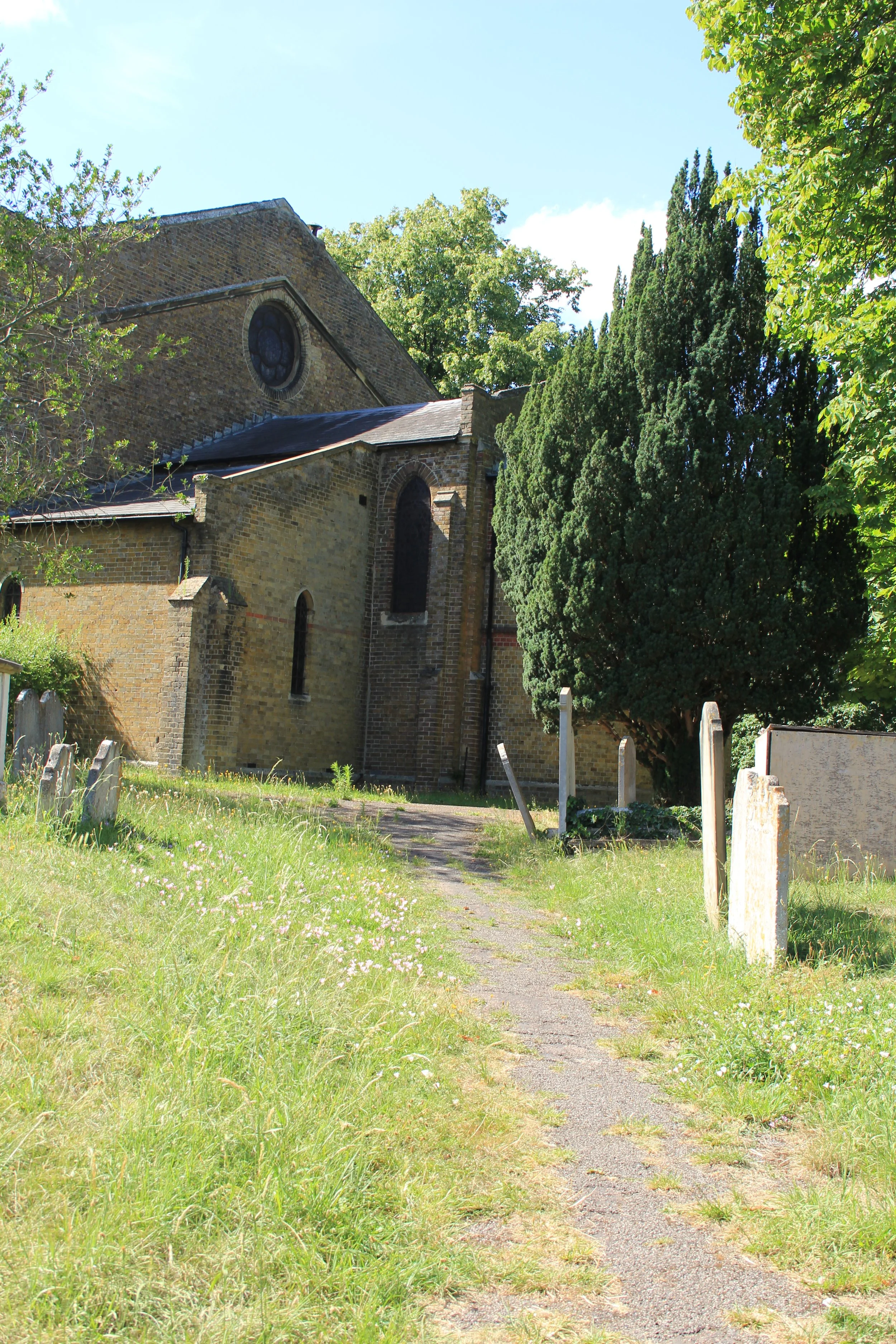
In 1885, a semi-circular apse with three graceful windows was added to the chancel. One of these windows was donated by the Crown Prince and Crown Princess of Prussia, in memory of Augusta Maria Byng, governess to the Prussian royal children, who once lived in Binbury Row (now the north-west end of Church Street). The organ was also relocated at this time to its current position behind the choir stalls.
The Brindley and Foster organ is thought to date from the early 1870s, though examination during its 1973 restoration by Bishop and Sons revealed that parts of the instrument were built before 1830. A church magazine account from the 1870s records that the organ was installed in 1871.
The 20th Century
During the Second World War, the stone pinnacles of the tower were removed for safety following blast damage in the area. Their absence is a quiet but visible reminder of the war's reach into everyday parish life.
St Mary's holds Grade II listed status, awarded in August 1952. The Grade II* designation — pronounced "Grade Two Star" — places St Mary's in a select category above a standard Grade II listing, recognising it as a building of more than special interest and one of the most historically significant churches in the Staines-upon-Thames area.
A poignant Trident Memorial Window was installed in 2004 to commemorate the victims of the Staines air disaster. On 18 June 1972, BEA Flight 548, a Hawker Siddeley Trident, crashed shortly after take-off from London Heathrow Airport, coming down near Staines and claiming the lives of all 118 people on board. It was the worst air disaster in British history until Lockerbie. The window was blessed by the then Bishop of Kensington, Michael Colclough, and anchors St Mary's firmly in the shared memory of the town.
Following a 1999 survey which revealed cracks in three of the bells, all eight were removed, repaired and re-tuned before being rehung and reconsecrated by Bishop Edward Holland in 2002.
Our church today
From ancient riverside origins to its modern role as a welcoming parish church, St Mary’s continues to be shaped by faith, renewal, and community. Standing by the Thames for more than 800 years, the church remains a living witness to the history and future of Staines-upon-Thames.
References
Historic England — National Heritage List Entry (No. 1187031)
British Listed Buildings — Church of St Mary, Staines
British History Online — Staines Introduction
Spelthorne Borough Council — Staines Conservation Area Appraisal (2023)
Surrey Live — Staines Historical Feature
Church of England Faculty Online — Church Heritage Record, St Mary Staines
Edith's Streets — River Colne Staines, Binbury Row reference (informal local historical source)
GENUKI — St Peter later St Mary the Virgin, Staines (informal source)
Wikidata — St Mary's Staines listing data